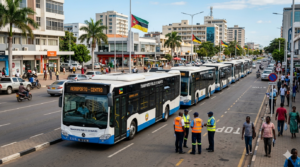
The city of Nampula, often referred to as the “Capital of the North,” is currently grappling with a wave of public anxiety following a series of road traffic accidents involving a brand-new fleet of public transport buses. Only weeks after the celebrated delivery of these vehicles—intended to modernize the provincial transport network—a string of collisions and mechanical failures has turned a symbol of progress into a subject of intense public debate.
For a region that has long struggled with transport infrastructure, the arrival of these buses was seen as a milestone. However, the recent incidents have raised urgent questions regarding driver training, vehicle maintenance standards, and the overall safety of the newly implemented transport systems.
1. The High Expectations for Nampula’s Modernization
Nampula is one of Mozambique’s most populous provinces, serving as a vital hub for trade and movement between the coast and the inland northern territories. For years, the local population relied on overcrowded “chapas” (privately owned minibuses) and aging infrastructure. The delivery of a modern, high-capacity bus fleet was a government-backed initiative designed to provide safer, more affordable, and reliable mobility for thousands of daily commuters.
The initial reception was overwhelmingly positive. Residents welcomed the climate-controlled interiors and the promise of standardized schedules. Yet, this honeymoon period was cut short as reports of accidents began to surface on social media and local news outlets, shifting the narrative from celebration to skepticism.
2. Analyzing the Recent Incidents: What is Going Wrong?
In the last month alone, several significant incidents involving the new fleet have been recorded. While some were minor “fender benders” in the city’s congested central markets, others have been more severe, occurring on the outskirts where speeds are higher and road conditions are less predictable.
Common Factors in the Accidents:
-
Urban Congestion: Nampula’s streets were largely designed for lower traffic volumes. Introducing large-capacity buses into narrow, busy corridors has proven difficult for some operators.
-
Mechanical Anomalies: There have been unverified reports of brake failures and steering issues, leading to speculation about whether the buses were properly “broken in” or if they are suitable for the local climate and dust levels.
-
Third-Party Involvement: In several cases, investigations suggest that motorcycles and informal taxis—common in Nampula—contributed to the accidents by ignoring traffic signals or cutting off the larger buses.
3. The Human Element: Driver Competency and Training
A significant portion of the public discourse has focused on the individuals behind the wheel. Operating a modern, high-capacity bus requires a different skill set than driving a traditional minibus or a light commercial vehicle.
Experts suggest that the transition period for drivers may have been too short. “Modern buses come with advanced electronic systems and different braking dynamics,” notes one transport consultant. “If a driver is used to older, manual machines, they might react incorrectly during a high-pressure situation.”
There are now calls for the transport authorities to implement a more rigorous certification process specifically for this new fleet, ensuring that every operator has undergone extensive hours of supervised driving before taking passengers.
4. Road Infrastructure Challenges in Northern Mozambique
It is impossible to discuss road safety in Nampula without addressing the state of the infrastructure. While the buses are “state-of-the-art,” the roads they traverse often are not.
-
Potholes and Erosion: Heavy seasonal rains in Mozambique can quickly degrade road surfaces. A modern bus hitting a deep pothole at speed can suffer suspension damage that leads to a loss of control.
-
Lack of Signage: Many secondary roads in the Nampula province lack clear lane markings and warning signs, making navigation treacherous for large vehicles, especially at night.
-
Pedestrian Traffic: Nampula is a vibrant city with high pedestrian activity. The lack of dedicated bus lanes means these large vehicles must compete for space with people, bicycles, and livestock.
5. Public Reaction and the Demand for Accountability
The citizens of Nampula have been vocal about their concerns. For many, these buses represent a taxpayer-funded investment that must be protected. When an accident occurs, it is seen not just as a traffic event, but as a failure of management.
Community leaders have called for “Black Box” transparency—demanding that the transport companies release data on accident causes. Is it the machine, the man, or the road? Without clear answers, rumors tend to fill the void, which can damage the reputation of the transport project permanently.
6. The Economic Impact of a Damaged Fleet
Every bus that is taken off the road for repairs represents a significant economic loss.
-
Reduced Revenue: Fewer buses mean fewer tickets sold, making it harder for the project to become self-sustaining.
-
Increased Wait Times: When the fleet is diminished, commuters return to informal transport, which is often less safe and more expensive.
-
Repair Costs: Sourcing parts for brand-new, specialized vehicles often involves importing components from abroad, leading to long delays and high costs in foreign currency.
7. Recommended Solutions: Restoring Safety and Trust
To turn the situation around, a multi-faceted approach is required. Transport authorities in Nampula should consider the following steps:
-
Mandatory Retraining: A one-week intensive safety course for all current bus operators, focusing on defensive driving and emergency maneuvers.
-
Infrastructure Audit: Identifying “high-risk zones” in the city where accidents are most frequent and implementing immediate road repairs or traffic light installations in those areas.
-
Public Awareness Campaigns: Educating other road users (motorcyclists and pedestrians) on how to safely share the road with large buses.
-
Enhanced Maintenance Protocols: Daily pre-trip inspections conducted by certified technicians to catch mechanical issues before the bus leaves the depot.
8. Summary: Progress with Responsibility
The delivery of new buses remains a milestone for Mozambique’s transport sector. It represents a vision of a more connected and modern Nampula. However, the recent accidents serve as a sobering reminder that technology alone is not a solution.
For the project to succeed, it must be supported by a culture of safety, rigorous training, and continuous infrastructure development. The people of Nampula deserve a transport system that is not only modern but, above all, safe.
Quick Facts for Commuters:
-
Location: Nampula City and surrounding provincial routes.
-
Issue: Increased accident rate among new public transport fleets.
-
Primary Concerns: Driver training, road quality, and vehicle maintenance.
-
Public Advice: Always use designated bus stops and remain vigilant when boarding or exiting large vehicles.
For the latest updates on transport safety and regional news in Northern Mozambique, keep following our portal—your source for investigative journalism and community updates.